

Improving care on our ward: from observation to engagement
28th October 2025
Written by Sarah McAllister – Head of Improvement Programmes
In inpatient mental health care, intermittent observations—routine checks on patients at set intervals—have long been used to manage perceived risk. While essential in some circumstances, these checks can become unnecessary, intrusive, and may not meaningfully improve outcomes. Recognising this, our Trust launched the Observation to Engagement programme in April 2025, aiming to safely reduce inappropriate intermittent observations and replace them with meaningful engagement that supports recovery, safety, and connection. See below for the programme level driver diagram.

The programme is being delivered in three phases:
- Phase One “testing what works” (April 2025 – March 2026) focuses on 10 pilot wards testing a variety of change ideas
- Phase Two “building belief” (March 2026 – Jul 2026) will test a change package of change concepts in different conditions across selected ward types to build degree of belief in what works
- Phase Three “embedding and spreading” (July 2026 – December 2026) will roll out the successful change concepts across all inpatient wards
What’s happening on the wards?
Pilot wards are exploring a range of change ideas designed to engage service users rather than simply observe them. Examples include scheduled activities and feelings thermometers to support emotional expression, zonal observations, and involving the whole ward in social and community meetings. Practical tools, like huddle prompts and triage templates with external referrers, help staff make sure every admission is purposeful.
Learning together
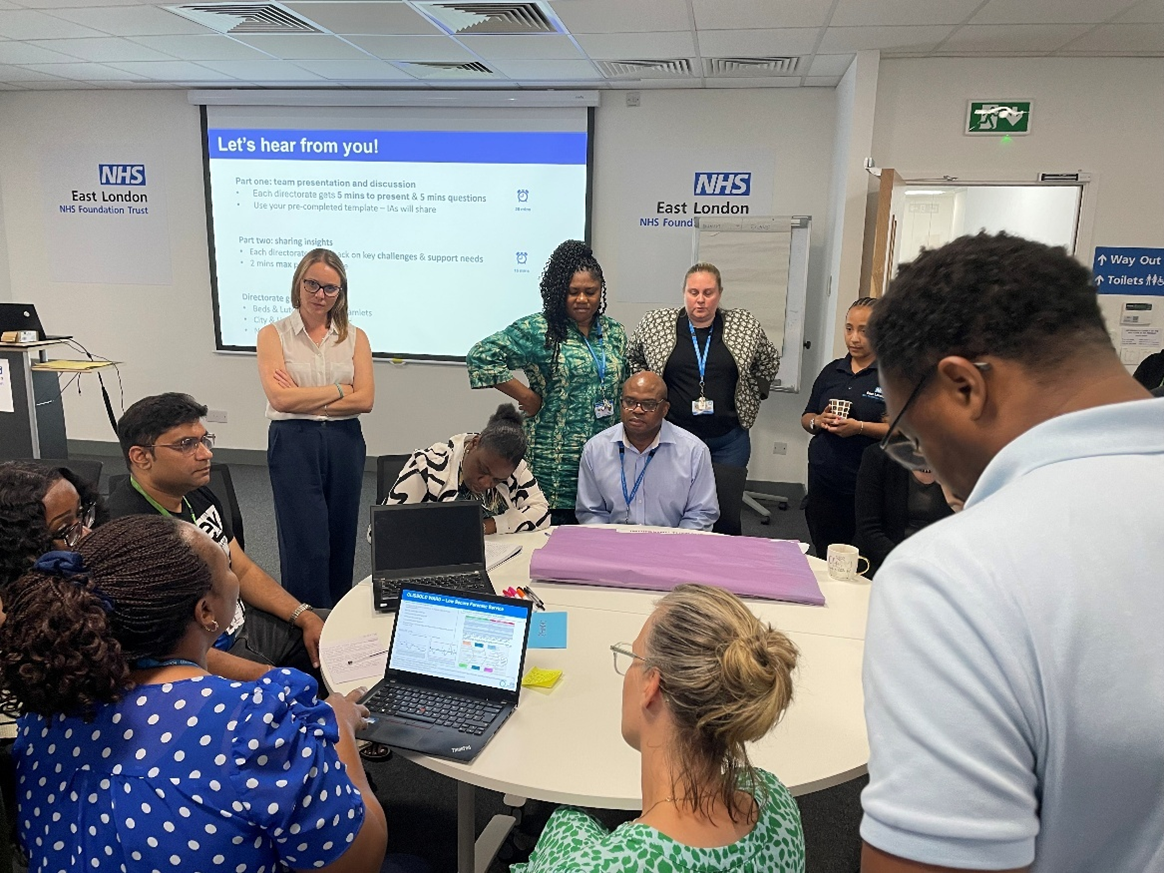
A key part of the programme’s success has been its six-weekly learning sessions, bringing together 40–60 staff from across all wards each time. These sessions are truly multidisciplinary, involving nurses, doctors, allied health professionals, psychologists, and service users. Each session combines networking, data reviews, practical workshops, and guest presentations to explore what’s working and what could be improved.
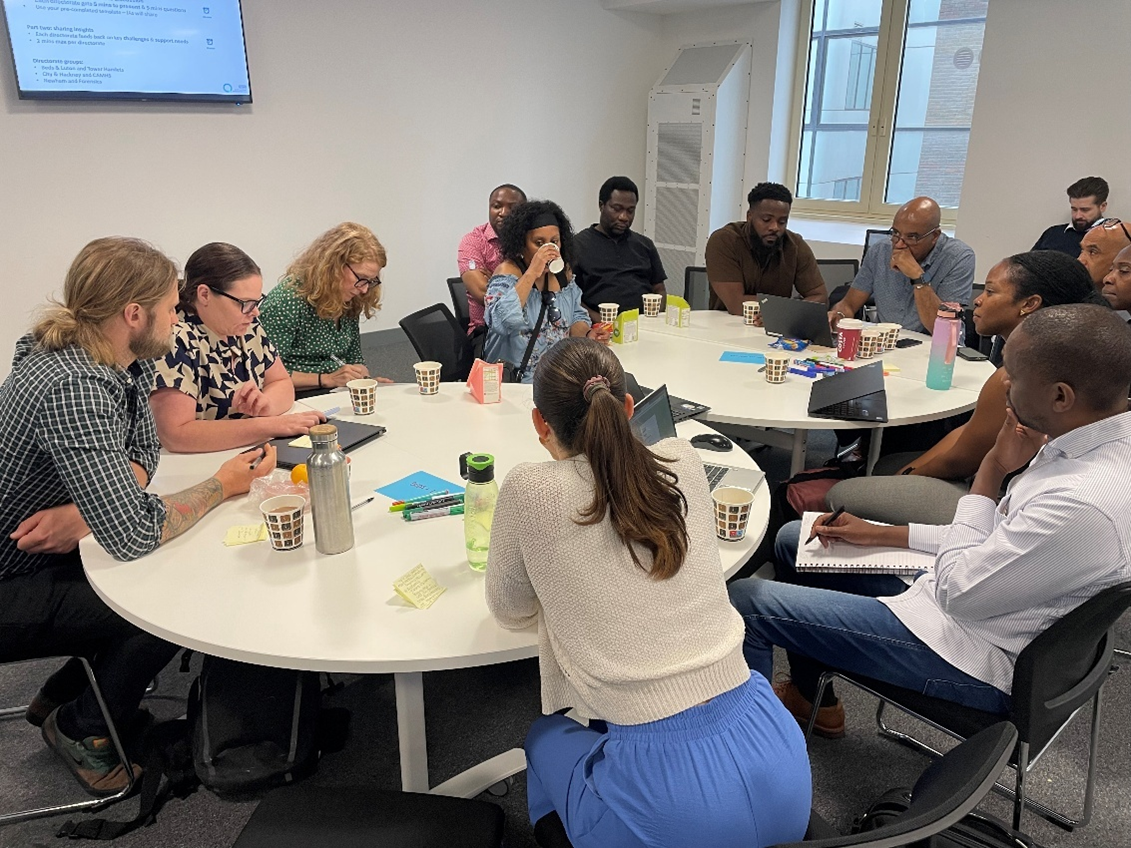
At the most recent session, staff heard from colleagues in Scotland, who shared their experience of reducing unnecessary observations. Teams then reflected on their own wards—examining the physical and social environments, reviewing change ideas, and considering how they could enhance engagement while maintaining safety. Exercises prompted teams to ask: “Does this change idea address safety concerns? Will it improve meaningful engagement? Whose perspectives have helped shape this idea?” Each team left with at least one action to test back on their ward, drawing on contributions from across the MDT. Since then, teams have been testing some of the ideas shared from Scotland, adapting them to their own ward environments and patient needs.
Building skills and culture
Colleagues from the Recovery College alongside the programme’s Experts by Experience senior sponsors are delivering the Art of Conversation training, helping staff apply the principles of meaningful engagement in practice. Tailored sessions to all our pilot wards during team away days strengthen the cultural shift, ensuring that safer, more engaging care becomes the standard across wards.
Looking ahead
As Phase One progresses, work is underway to map and streamline ward activities, reduce duplication, and clarify which improvements are directly linked to the programme. This ensures that staff time is protected and focused on spreading the most effective ideas across the Trust in 2026.
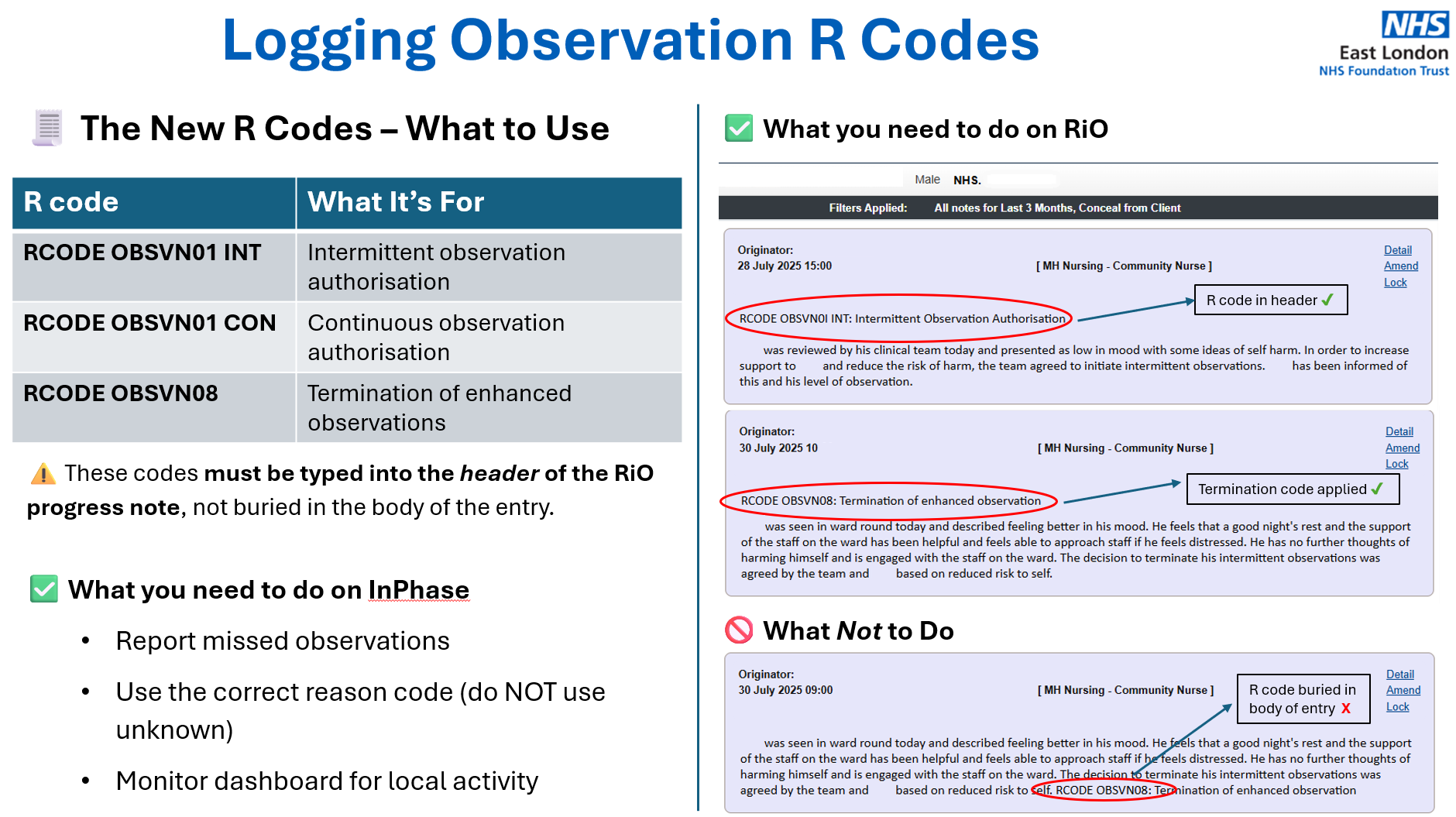
Work is also underway to improve the accuracy of observation data across all inpatient wards. Teams are now required to use updated R codes that distinguish between intermittent and continuous observations. This will allow the Trust to more precisely track changes, understand what’s working, and measure the impact of the programme as it moves into Phases Two and Three. The figure below shows how the new coding system is being applied across all inpatient teams. All inpatient teams are now asked to consistently use the new R codes.
Most Read Stories
-
Why is Quality Control important?
18th July 2018
-
2016 QI Conference Poster Presentations
22nd March 2016
-
Recognising Racism: Using QI to Help Take Action
21st January 2021
-
QI Essentials: What does a Chief Quality Officer do?
18th March 2019

-
-
Using data enabled us to understand our problem
31st March 2023
Follow QI on social media
To keep up to date on the latest concerning QI at ELFT, follow us on our socials.