

Increasing access to the Criminal Justice Liaison & Diversion Service for people from the global majority in Bedfordshire & Luton
29th January 2026
Project Lead: Stuart Williams; Project Team: Zoe Brown, Matthew Hill, Sabri Ali, Amy Schilling, Christie Boachie-Ansah; Improvement Coach: Beatrice Tinkler; Improvement Advisors: Cassie Philpin & Miles Tringham
Despite evidence showing that people from the global majority are more likely to come into contact with the criminal justice system and for that to be a more common route into accessing mental health support than white people, the Bedford Liaison & Diversion (L&D) Service found that they received fewer referrals for people from black and minority ethnic backgrounds. Last year, they completed a QI project to help narrow this inequity of access.
Background
The L&D Service offer support to people who come into contact with the criminal justice system who have mental health and other vulnerabilities. The service can then support people through the early stages of criminal justice pathway, refer them for appropriate health or social care, or if required, enable them to be diverted away from the criminal justice system into a more appropriate setting.
Inequity in the criminal justice system and access to mental health care
The Lammy Review (2016) found that people from the global majority are over-represented in the Criminal Justice System.
- Young black males are three times more likely to be arrested and 10.5 times more likely to be arrested for robbery than young white males
- For every 100 white women given a custodial sentence for drug offences, 227 black women are sentenced to custody for the same offence
- A.M.E people are more likely to be convicted at magistrates’ court, have their case sent to Crown Court and be sent to prison from Crown Court
In addition, a study into the racial and ethnic disparities in mental health care (2014) found that
- Black and minority ethnic people are 40 percent more likely to access mental health services via the criminal justice system than white people
- Black and minority ethnic communities are less likely to access mental health support in primary care and more likely to end up in crisis care.
Despite this over-representation in the Criminal Justice System, when the L&D Service reviewed their data, they found that they received fewer referrals each month for people from black and minority ethnic backgrounds than white people. The team therefore started a QI project with a focus on reducing this inequity of access.
Aim
The L&D Service started collecting baseline data and found that on average, 23% of white people who were arrested each month were referred to their team compared to just 16% for people of other ethnicities.
They set an aim of increasing referrals to an average of 23% of BAME detainees per month by September 2025.
Theory of change
The team created a Driver Diagram to build their theory about the changes they could introduce that would contribute to achieving their aim (figure 1).
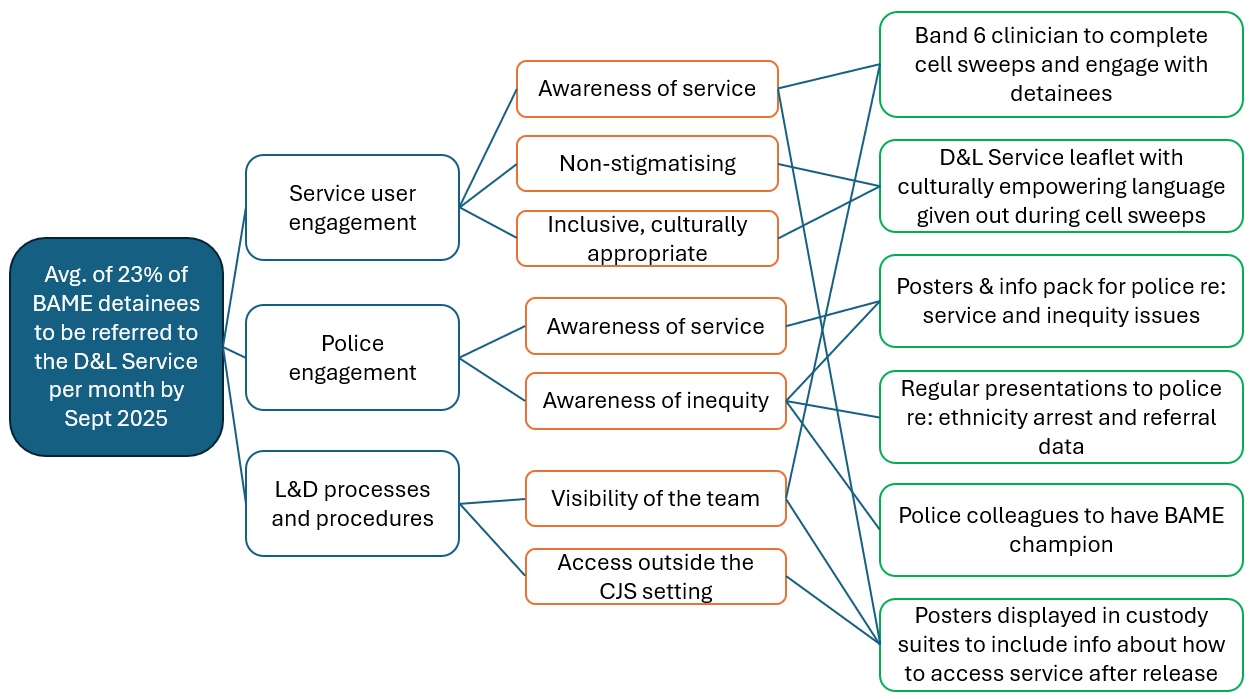
Figure 1: Driver Diagram
The change ideas that the team went on to test were:
- Regular presentations of ethnicity arrest and L&D Service referral data to police
- Posters displayed in custody suites (see Figure 2)
- L&D Service Information pack for police
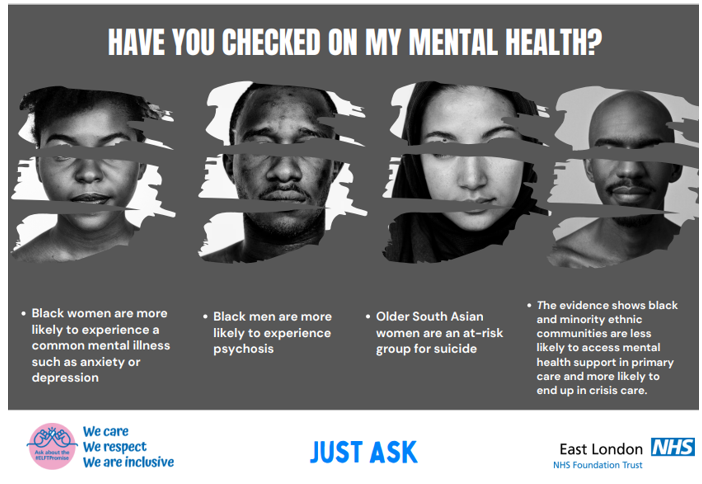
Figure 2: Example of a custody suite poster
Impact
The L&D Service used Statistical Process Control Charts to understand the impact that the change ideas they tested had on the referral rates for BAME detainees (see figure 3).
They worked closely with a police colleague who acted as a BAME champion and in September 2023, they started to share the L&D data with the police, raising their awareness of the service and the disparity in referral rates. This initial change saw a sustained increase in referrals and highlighted the importance of police engagement with the service and the issue of inequity.
Unfortunately, the police colleague who had been motivated to fulfil that role left the project 3 months later and the L&D Service. No other police colleagues came forward to take responsibility for sharing the referrals data, so the L&D Service decided to introduce another change idea to help raise awareness of their service among policing staff and people who had been detained.
In May 2025, the L&D service started displaying posters in police custody suites and in the subsequent months saw three consecutive data points outside the SPC upper control limit. This is unlikely to happen by chance, so the team felt confident that the posters were having a positive impact.
In August 2025, they circulated an information pack to police highlighting the ethnic disparities in access to the criminal justice system and mental health care. In the same month, they saw the highest proportion of BAME detainees being referred into their service since they started collecting data in October 2022.
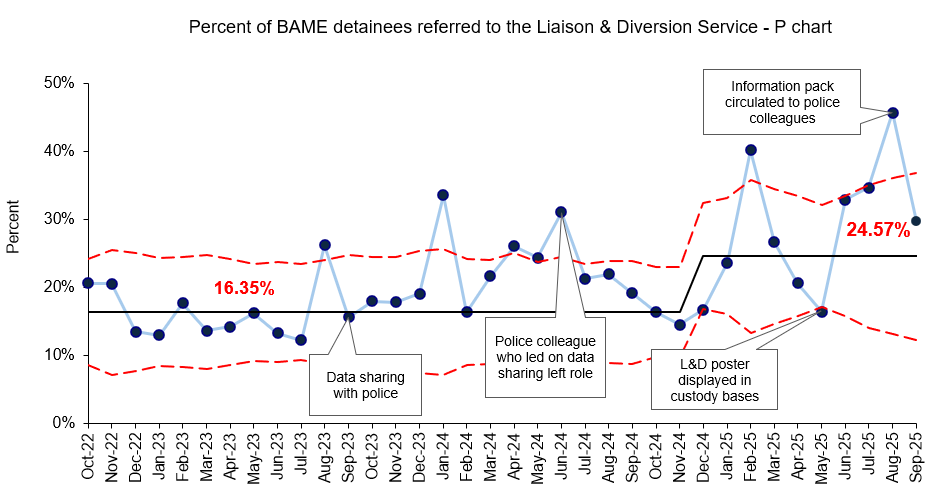
Figure 3: SPC Chart – percentage of BAME detainees who were referred to the L&D Service per month
BAME referrals now account for an average of nearly 30% of referrals received by the L&D Service, compared to 25.6% at the start of the project (see figure 4).
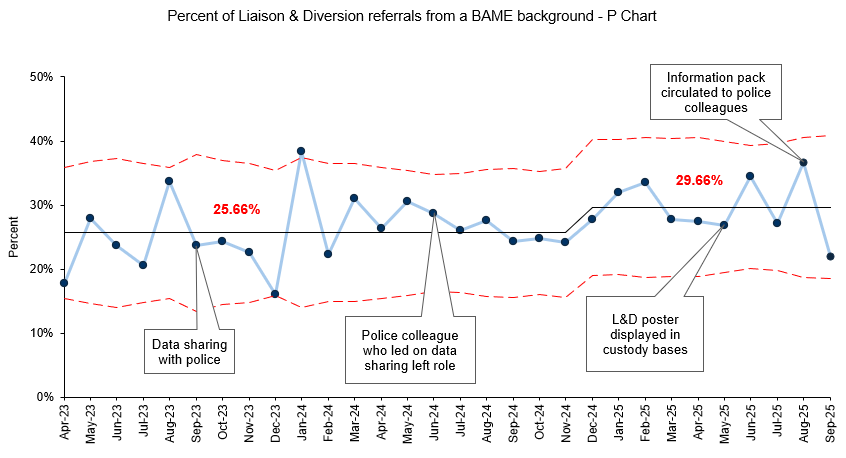
Figure 4: SPC Chart – percentage of L&D Service referrals who have a BAME background
The introduction of the poster has also had an impact on overall referrals into the service, increasing from an average of 23% of all detainees being referred to 30% (see figure 5).
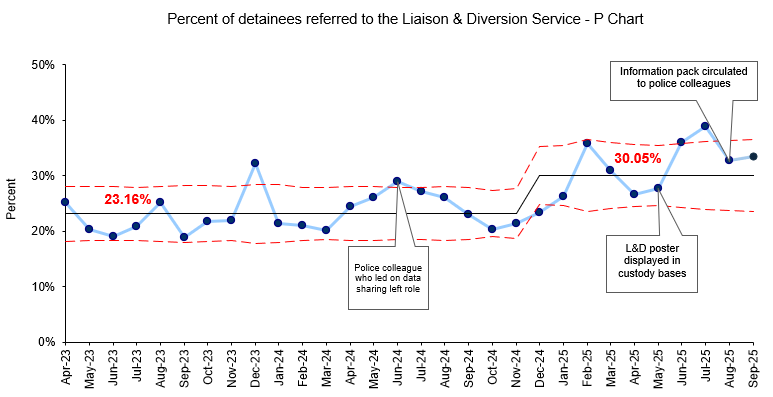
Figure 5: SPC Chart – percentage of all detainees being referred to the L&D Service
Implementation
To sustain the improvement seen in referrals, The L&D service have decided to
- Permanently display posters in custody bases
- Review, update and circulate the information pack annually.
- Review referral data every 6 months in the L&D multi-disciplinary team meeting to check if improvements have been sustained, or if further action is required.
Impact
The difference in referrals for people from the global majority compared to those of white detainees suggests a cultural issue within the criminal justice system that means that the mental health needs and vulnerabilities of the global majority are not identified as consistently as those of the indigenous population.
The changes that the Bedford L&D Service have introduced to the system have raised awareness and resulted in sustained improvements in referrals from police colleagues. This positive change means the L&D service have more opportunities to identify and treat the mental health needs for the local global majority at a vital time in their lives and potentially support them to avoid future contact with the criminal justice system.
Most Read Stories
-
Why is Quality Control important?
18th July 2018
-
2016 QI Conference Poster Presentations
22nd March 2016
-
Recognising Racism: Using QI to Help Take Action
21st January 2021
-
-
QI Essentials: What does a Chief Quality Officer do?
18th March 2019

-
Using data enabled us to understand our problem
31st March 2023


Follow QI on social media
To keep up to date on the latest concerning QI at ELFT, follow us on our socials.