

Looking Beyond Activity: Exploring Outcomes and Information Sharing in London Community Health Services
16th June 2026
By Chloe Preston, Improvement Advisor
In May 2026, London Community Health Services (CHS) welcomed Susan Hannah from the Institute for Healthcare Improvement (IHI) for a dedicated learning session. Against the backdrop of the emerging NHS 10-Year Health Plan, which emphasises prevention, early intervention and care closer to home, the session focused on how community health services can better understand and demonstrate the impact of their work across neighbourhoods and communities.
Nearly 40 senior leaders and team leads from across London CHS came together around a central question:
How can we better capture, use, and share information to demonstrate impact, enable joined-up working, and improve outcomes for service users and communities?
Starting with soup, not data
Rather than beginning with data, dashboards, or performance metrics, the session started with a simple analogy: soup.
Participants were asked to consider how they know a bowl of soup tastes good. Even if every step of a recipe is followed correctly, the final test is in the tasting. In the same way, activity alone does not tell us whether people are achieving better outcomes, maintaining independence, avoiding deterioration, or experiencing better care. The conversation helped shift the focus from measuring what we do to understanding the difference our work makes.
Recognising the value of what already happens
The first discussion explored how CHS can better evidence prevention and the wider impact of community-based care. Participants highlighted the breadth of preventative, holistic and person-centred work already taking place, including supporting independence, enabling self-management, working with carers and families, connecting people to community resources, and preventing avoidable deterioration or hospital admission.
Alongside this, there was recognition of the need to strengthen how this work is evidenced. Participants discussed the value of more consistent outcome measures, shared approaches to data collection, and clearer definitions of success to better demonstrate impact across services and the wider system.
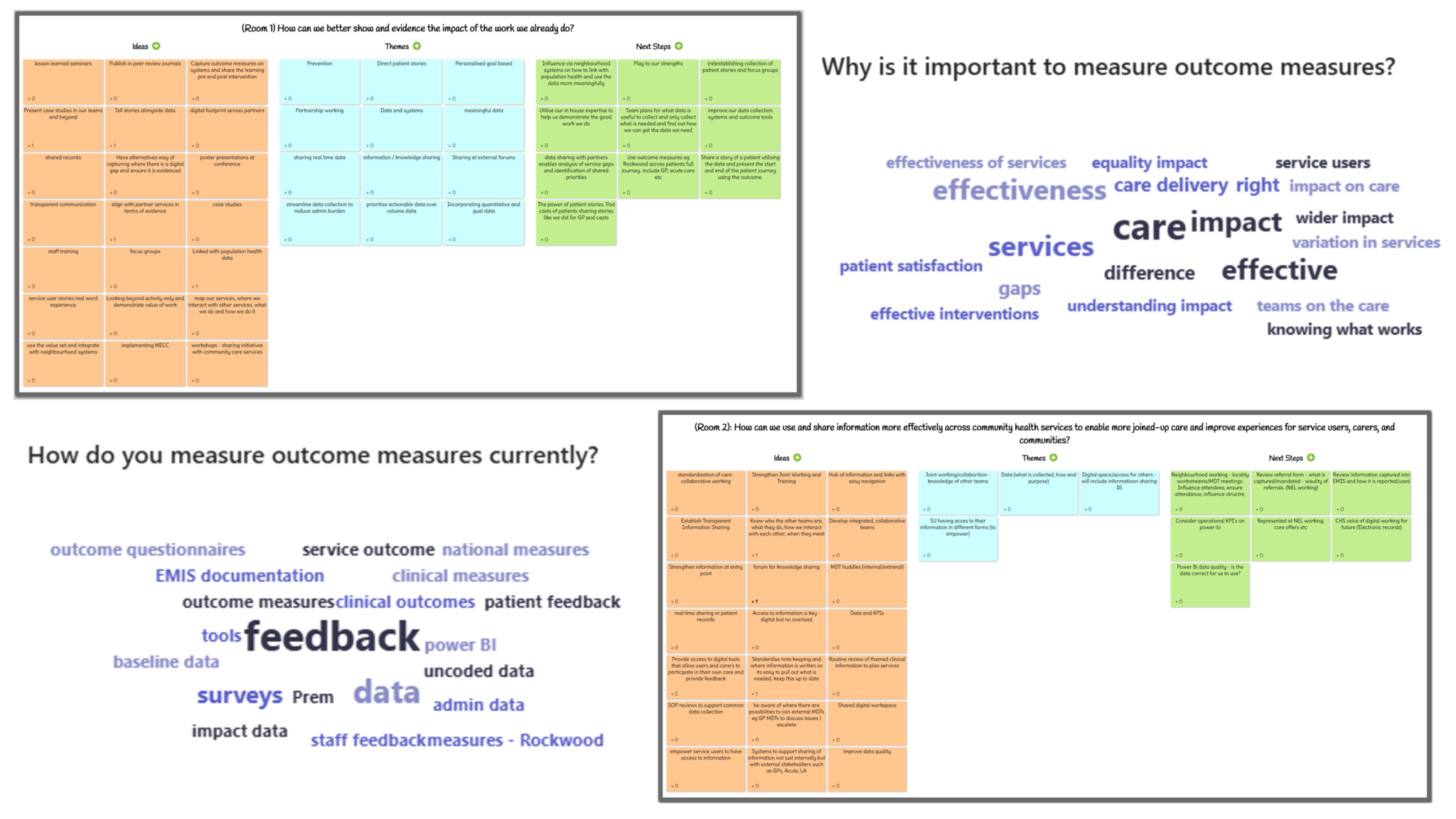
Figure 1: Some of the outputs from the session
Improving how information is shared
The second discussion focused on how information could be used and shared more effectively to support joined-up care. Participants described how information is often held across multiple teams, services and systems, making it harder to build a complete picture of need and leading at times to duplication, delays and missed opportunities for early intervention.
There was a strong emphasis on strengthening communication between teams, improving understanding of roles across CHS and partner organisations, and making better use of multidisciplinary and neighbourhood-based working. Participants also highlighted the importance of improving interoperability and shared access to information, alongside the critical role of relationships, trust and regular communication in enabling effective information sharing.
The discussion reinforced the view that improving information sharing is not simply about moving information between systems. It is about creating a more connected approach to care, where professionals, service users, carers and partner organisations can work together around a shared understanding of need.
Common themes emerge
Across both discussions, several consistent themes emerged.
Participants highlighted that joined-up, person-centred care depends on both effective systems and strong relationships between teams and organisations. Improving clarity around roles, strengthening communication, and developing more consistent pathways were seen as key to supporting people to access the right care at the right time.
Information sharing was a further strong theme, particularly the potential of improved interoperability, shared records, and better use of existing data to support more coordinated care. At the same time, participants emphasised the importance of understanding how information is used and ensuring it contributes meaningfully to improved outcomes.
The role of carers, families and wider partners, including Adult Social Care, neighbourhood teams and mental health services, was also highlighted as essential to improving outcomes beyond individual services.
From discussion to action
Participants were keen to move beyond discussion towards practical action. Key areas identified included reviewing and standardising escalation and referral pathways, exploring shared care planning across CHS teams, and making better use of existing MDT and collaborative forums. There was also a focus on strengthening relationships with Adult Social Care, neighbourhood teams and wider partners, alongside developing more consistent approaches to capturing meaningful outcomes and preventative impact.
Closing the session, Susan Hannah reflected on the energy, knowledge and commitment in the room. She encouraged participants to challenge assumptions about information sharing, noting that barriers are not always technical or legal but can be rooted in longstanding ways of working. She also emphasised the importance of focusing on the data that truly matters for improvement, applying an equity lens to ensure marginalised groups are not overlooked, and creating regular opportunities for teams to think deeply together about complex challenges. Above all, she encouraged London CHS to build on the momentum by identifying a small number of priorities and moving quickly from discussion to action.
Rather than a standalone event, the session marks the start of an ongoing piece of work. The London CHS Senior Leadership Team will now review the outputs in more detail and identify a small number of practical actions to test and refine across services.
Most Read Stories
-
Why is Quality Control important?
18th July 2018
-
2016 QI Conference Poster Presentations
22nd March 2016
-
-
Recognising Racism: Using QI to Help Take Action
21st January 2021
-
QI Essentials: What does a Chief Quality Officer do?
18th March 2019
-
Using data enabled us to understand our problem
31st March 2023

Follow QI on social media
To keep up to date on the latest concerning QI at ELFT, follow us on our socials.