

More people seen, fewer appointments missed: sustained improvement at City & Hackney Psychotherapy Service
9th October 2025
Written by Carlos Santos (improvement advisor), Joanne Hipplewith, and Marina Paes
City & Hackney Specialist Psychotherapy Service (SPS) has achieved a remarkable, sustained improvement in access to care — increasing the number of people seen each month while reducing the proportion of missed appointments.
The Challenge
Missed appointments (DNAs) have long been a challenge across healthcare services. At SPS, the issue was most noticeable for first assessment appointments, where service users often felt anxious about attending. As is common practice, processes at the time relied on administrative reminders, with limited pre-appointment engagement to help prepare service users for what to expect. At the same time, long waits and variation in clinician job plans sometimes meant access to treatment could be delayed, with some people waiting months before being seen.
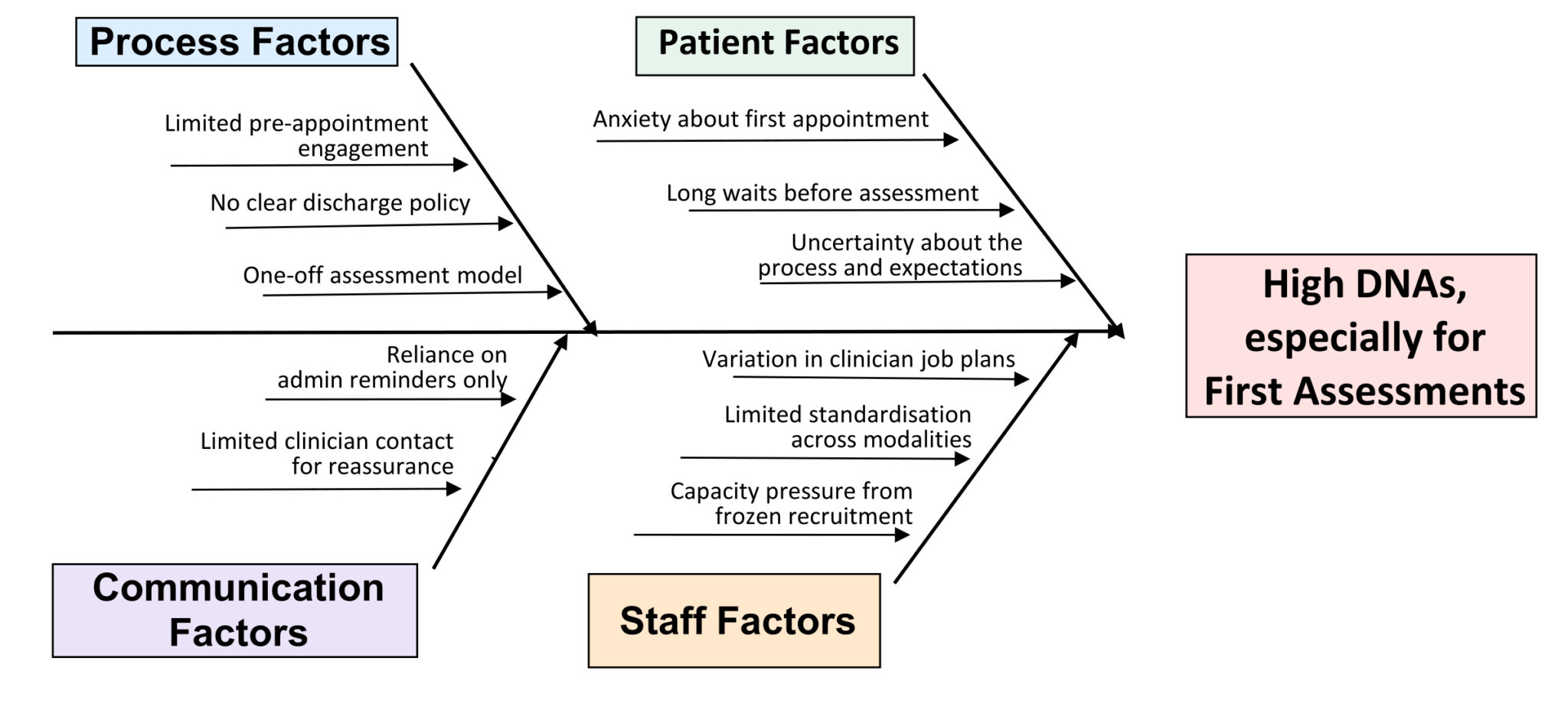
Figure 1: Ishikawa (fishbone) diagram of contributing factors to high Did Not Attend (DNA) figures at City & Hackney SPS (2024-5), highlighting process, patient, staff, and communication-related causes. These root causes informed the improvement work that led to sustained reductions in DNAs from 16% to 9%.
The Improvement Journey
Beginning in March 2024, the team introduced a bundle of changes:
- Clinician-led contacts before assessments: Multiple pre-appointment calls made by clinicians helped reduce anxiety about attending the first session, historically the point with highest DNA rates.
- Two-stage assessments and multidisciplinary (MDT) consultation: Each assessment now takes place across two appointments, with every case discussed by the MDT before a treatment decision is made. This safeguarded quality, even with grown demand.
- Clear discharge policy: Service users who did not attend after repeated contacts were discharged, reducing repeat DNAs.
- Job plan review: Clinician job plans were clarified, strengthening the treatment offer and ensuring more consistent throughput.
The Impact
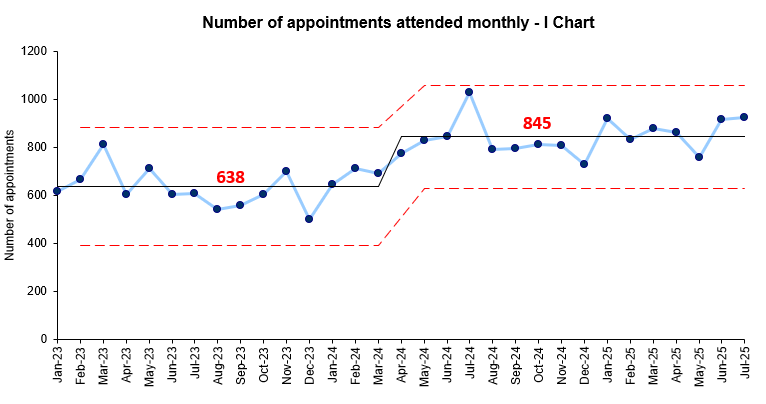
Figure 2: I-chart showing an increase in the mean number of attended appointments, from 638 to 845 appointments per month at City & Hackney Specialist Psychotherapy Service (SPS).
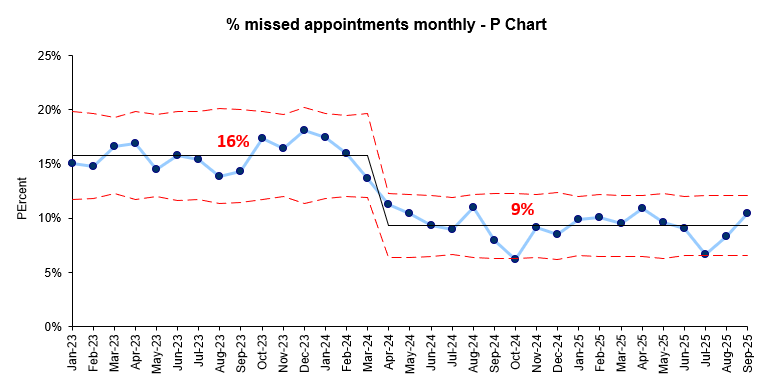
Figure 3: Percentage of missed appointments monthly at City & Hackney Specialist Psychotherapy Service (SPS). The percentage of missed appointments reduced from 16% to 9%.
The results have been striking.
- The number of attended appointments rose from an average of 638 to 845 per month.
- Despite this increase in opportunities for non-attendance, the absolute number of missed appointments remained broadly stable.
- As a result, the proportion of missed appointments fell from 16% to 9%, with this improvement sustained since March 2024.
The human story
For staff, the changes have provided reassurance that their efforts are making a difference. Clinicians have noted that calling service users before their first appointment not only reduced DNAs but also helped establish a therapeutic relationship earlier.
Marina Paes, Lead for Psychodynamic Psychotherapies, reflected:
“What makes me proud is that we’re seeing more people, but without losing quality. In fact, our new assessment model gives service users more space and ensures every case is considered by the whole team. That feels like a win for both access and care.”
Looking ahead
The SPS team has shown that it is possible to scale throughput, reduce DNAs, and preserve quality through thoughtful systemic changes. Their work is now being shared across the Trust to inform future improvement efforts.
Most Read Stories
-
Why is Quality Control important?
18th July 2018
-
2016 QI Conference Poster Presentations
22nd March 2016
-
Recognising Racism: Using QI to Help Take Action
21st January 2021
-
-
QI Essentials: What does a Chief Quality Officer do?
18th March 2019
-
Using data enabled us to understand our problem
31st March 2023
Follow QI on social media
To keep up to date on the latest concerning QI at ELFT, follow us on our socials.