

Safer, More Therapeutic Observation Practice: Testing Change on Jade and Onyx Wards
22nd October 2025
As part of the trust-wide programme to safely eliminate the use of inappropriate intermittent observations by March 2026, Jade and Onyx wards in Luton have been focusing on testing practical, ward-level changes that strengthen therapeutic engagement and improve decision-making around observations. The work is being led by a multidisciplinary team, with service user feedback at the centre of their approach.
What changes have the wards been testing?
The teams brought together their ideas to visually display their theory of change in the form of a driver diagram (Figure 1).
On Jade Ward, the focus has been on creating space for open conversations about observations and engagement. Since July, the ward has been testing the use of community meetings as a regular forum to discuss observations and therapeutic engagement. Service users are invited to share how being on observations feels, ask questions, and suggest activities they would like to see on the ward. The team’s first plan-do-study-act (PDSA) cycle showed that limited time and lack of structured questions reduced feedback, but learning from this cycle has prompted the team to move the discussion earlier in meetings and introduce structured prompts to guide reflection and feedback.
Similarly, on Onyx Ward, a daily patient huddle has also been introduced to plan activities and promote engagement. Early feedback and anecdotal reports suggest this has improved the ward atmosphere and strengthened relationships between staff and service users.
Alongside this, both wards have been using daily safety huddles to review observation levels in real time, supported by RiO and Power BI dashboards. This has led to more timely and accurate updates to observation records and a noticeable increase in staff confidence when reviewing and downgrading observation levels appropriately. The process is now more proactive; staff can now review and update observation levels promptly, saving time and ensuring that enhanced observations are used only when needed.
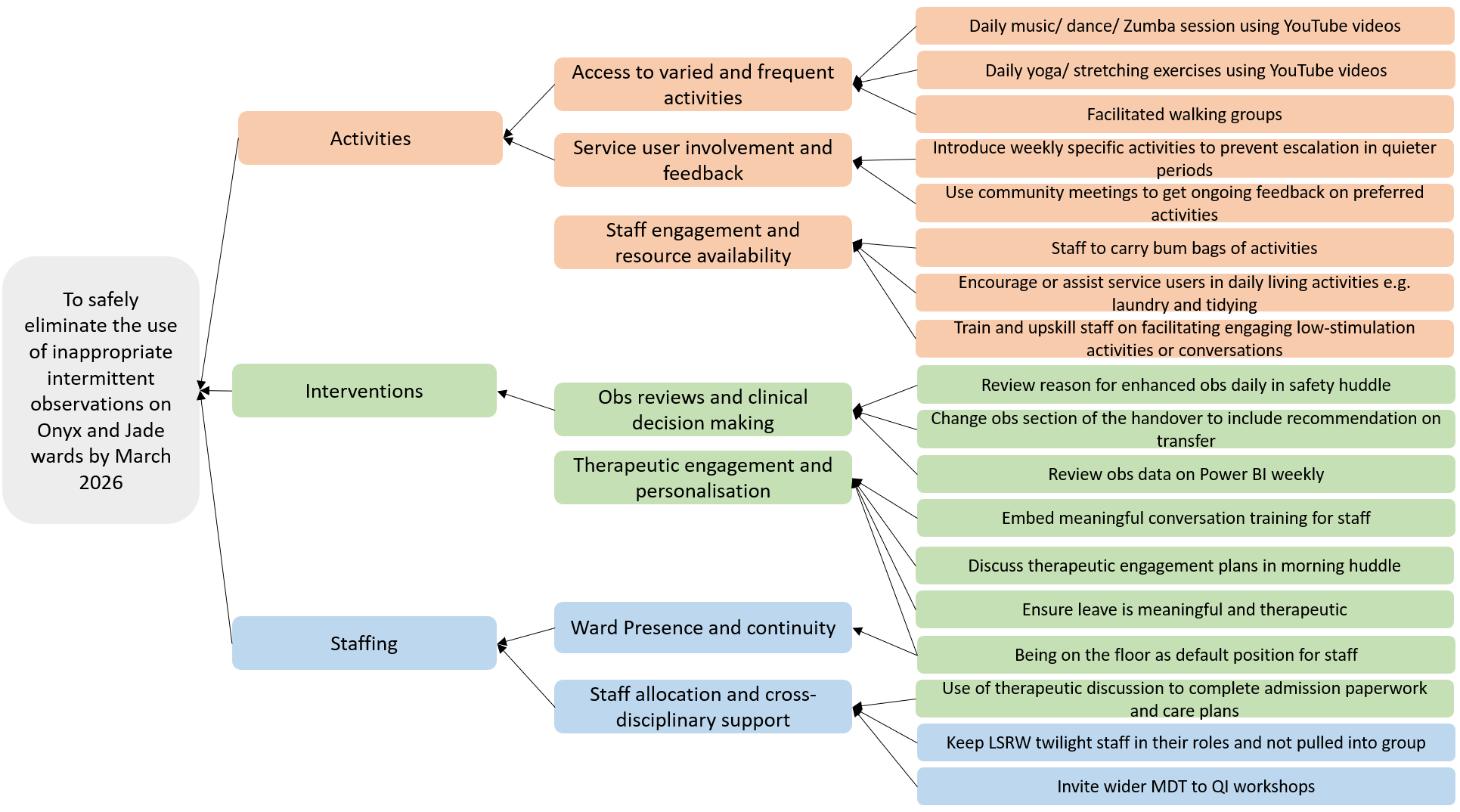
Figure 1: driver diagram
How do the team plan to build on their progress?
The team are keen to continue building momentum. The next phase of the project will focus on testing new change ideas centred on enhancing therapeutic engagement, while also strengthening collaboration with medical staff to ensure observation decisions are timely, consistent, and clearly communicated across the multidisciplinary team.
Most Read Stories
-
Why is Quality Control important?
18th July 2018
-
2016 QI Conference Poster Presentations
22nd March 2016
-
Recognising Racism: Using QI to Help Take Action
21st January 2021
-
-
QI Essentials: What does a Chief Quality Officer do?
18th March 2019

-
Using data enabled us to understand our problem
31st March 2023
Follow QI on social media
To keep up to date on the latest concerning QI at ELFT, follow us on our socials.