

Strengthening Community Partnerships to Boost Engagement at Coborn Day Service
8th April 2026
Written by Gladys Bozorgisaran (Advanced Social Worker), Catherine Peasah (Clinical Nurse Manager), and Lucy Brewer (Improvement Advisor)
Over the past few months, the Coborn Day Service team has been taking part in the Improvement Leaders’ Programme, which has been a really valuable opportunity to build our skills and confidence in quality improvement. Through the programme, we’ve been learning more about the Sequence of Improvement and how to use it to structure our work in a clear and purposeful way. It’s also helped us think more carefully about what we measure, why it matters, and how small, safe tests of change can help us try out new ideas before scaling them. This learning has played a key role in shaping how we approach improvement across our service.
This learning has been put straight into practice with one key challenge: how do we make the Coborn Day Service more accessible, better understood, and more confidently used by our community partners and families?
We know the Day Service has huge potential. It offers intensive support, prevents unnecessary admissions, and provides a vital stepdown pathway to help young people transition back into home, school, and community life. But despite its value, the service has been under used; referrals have remained low, and occupancy hasn’t been consistent. So, we set out to explore what’s getting in the way and what partnerships, processes, or communication gaps we could strengthen to make a real difference.
We set the following aim: Increase access to Coborn Day Service from an average of 2 to 6 young people on the caseload each month, by June 2026.
How We’re Measuring Progress
To make sure we’re genuinely improving things, not just changing them, we’re measuring:
- Young people on the Day Service caseload
- Days attended at the Day Service
- Attendance at multi‑agency huddles and drop ins
- Average length of stay on Nova Ward
What Change Ideas We’ve Tested So Far
🚕 Exploring Transport Options
Testing whether taxi transport removes barriers to attending the service.
🤝 “Porch Meetings”
A 30‑minute multi-agency huddle to support shared planning and earlier referrals.
👨👩👧 Family Engagement Drop‑ins
Monthly informal drop-ins to help families understand the pathway and feel more involved.
📦 Creating a Welcome Pack
A digital pack to help teams and families navigate the pathway with more clarity and confidence.
Results and Next Steps
We’re already starting to see real, sustained improvement. Over the past few months, the Day Service caseload has grown from an average of 2 young people to around 5 per month, showing that the changes we’ve tested are genuinely making a difference (fig 1).
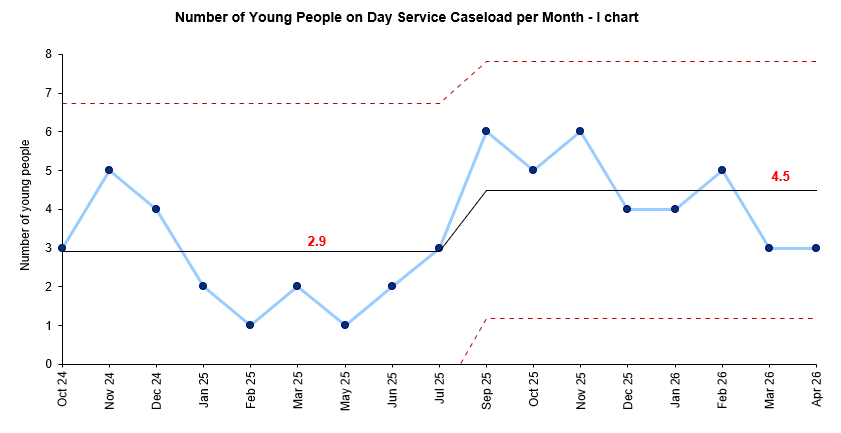
Fig 1: Control chart showing number of young people on the day service caseload
Looking ahead, our next phase of work will focus on boosting day-to-day attendance—particularly by continuing to tackle transport barriers—and strengthening referral pathways from the acute ward, so that young people who could benefit from the Day Service are identified earlier and supported to step down safely and smoothly.
The Bigger Picture
This project is about more than increasing numbers — it’s about building trust, strengthening collaboration, and ensuring young people get timely, community based support that keeps them close to their lives, their families, and their goals. Through the Improvement Leaders Program, our team is building the skills, structure, and confidence needed to lead meaningful and sustainable change.
Most Read Stories
-
Why is Quality Control important?
18th July 2018
-
2016 QI Conference Poster Presentations
22nd March 2016
-
Recognising Racism: Using QI to Help Take Action
21st January 2021
-
-
QI Essentials: What does a Chief Quality Officer do?
18th March 2019

-
Using data enabled us to understand our problem
31st March 2023
Follow QI on social media
To keep up to date on the latest concerning QI at ELFT, follow us on our socials.