

Listening to Neurodivergent Parents and Improving Perinatal Care
27th March 2026
Written by Erin Lanny (Clinical Practice Lead), Sarah Rata (Lead Nursery Nurse), Emma Terry (Modern Matron), Justine Cawley (Trustwide Lead for Perinatal Mental Health), Sam McGavin (Senior Social Worker and Carers Lead), and Clarissa Sørlie (Improvement Advisor)
A new focus for the East London Mother and Baby Unit
On the East London Mother and Baby Unit (MBU), staff have been noticing a clear pattern. Women and birthing people with autism, ADHD, or other neurodivergent traits may experience inpatient admission as particularly challenging, especially where their needs are not fully understood or supported. A number of neurodivergent parents have needed seclusion, restraint during moments of high distress, or have had unplanned transfers to acute psychiatric wards. In a few cases, this meant being separated from their baby, which is deeply difficult for any parent to experience.
Having recently completed a successful Quality Improvement (QI) project to redesign observation practice on the ward, the team have shifted their focus to improving the experience of neurodivergent women and birthing people. They want to understand the barriers to recovery focused care and positive care experiences, and what practical changes could help neurodivergent parents feel safer and more supported.
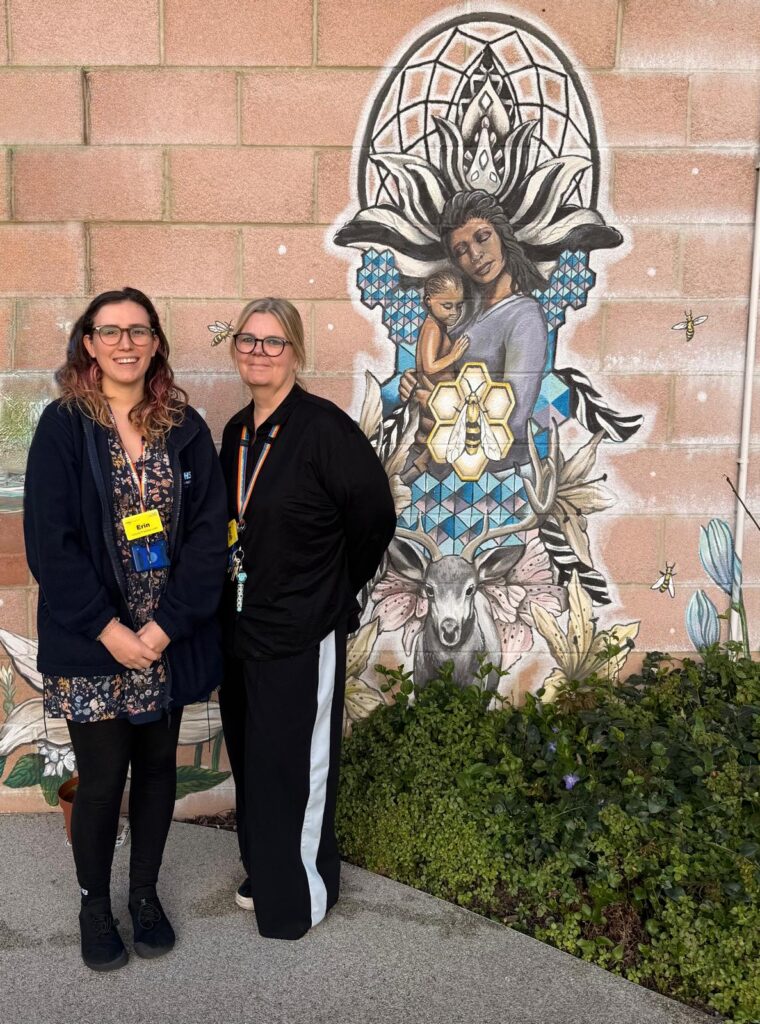
Figure 1. Project leads Erin Lanny and Sarah Rata in front of the MBU mural
This project has the potential to make significant improvements across three broad areas:
- People: at its heart, this project is about making sure that neurodivergent parents feel understood and supported at one of the most important and vulnerable times in their lives. Better understanding and tailored care can reduce distress, support bonding, and help parents feel safer and more confident
- Pounds: fewer crisis-driven interventions, lower use of seclusion and restraint, and reduced transfers to acute wards all ease pressure on services and help resources go further
- Planet: although the project is primarily about improving experiences and outcomes for neurodivergent parents, preventative care can have a lower environmental footprint, for example by reducing the use of emergency medications
The wider context
A growing body of research tells us that neurodivergent people often face additional challenges during pregnancy, birth, and early parenting. A review by Elliott et al. (2025) describes how typical perinatal services do not always account for sensory differences, communication needs, or the emotional and cognitive load that neurodivergent parents may carry. The review highlights the need for more neuro‑affirming care, meaning care that works with the person’s neurotype rather than expecting them to fit into standard models.
There is also increasing awareness about how ADHD affects the perinatal period. ADHD can influence emotional regulation, overwhelm, and executive functioning, all of which are stretched to the limit when caring for a newborn. A 2025 blog from the Maternal Mental Health Alliance brings together lived experience stories showing how easily ADHD can go unnoticed in mothers and birthing parents, leaving them without support that could make day-to-day caregiving feel more manageable.
A systematic review by Mackintosh et al. (2024) brings these concerns into focus. Across 14 studies and more than 900,000 participants, researchers found consistent links between neurodevelopmental conditions and increased anxiety and depression during the perinatal period. Many neurodivergent participants described healthcare that did not meet their needs, difficulties bonding with their baby, and distress linked to sensory overload.
This project also sits within a much larger national challenge. The MBRRACEUK reports, which investigate maternal deaths across the UK and Ireland, have repeatedly shown that deaths linked to mental health remain one of the leading causes of maternal mortality in the months after birth. The 2025 report highlights that 88 women and birthing people died by suicide between 2021-3. Many had known mental health needs and were living with significant disadvantage. The report highlights key issues such as limitations in communication, unmet mental health needs, and insufficient personalised care, all of which are likely to be highly relevant to neurodivergent service users.
The QI project
Supported by their training on the Improvement Leaders Programme, the team have started to better understand the problem. They are exploring sensory elements of the ward environment through ward walkarounds and are establishing a focus group to gather service user feedback and ideas. These ideas will help them to further develop their driver diagram (see image 2, below), which outlines their theory of how to improve the experience of neurodivergent parents.
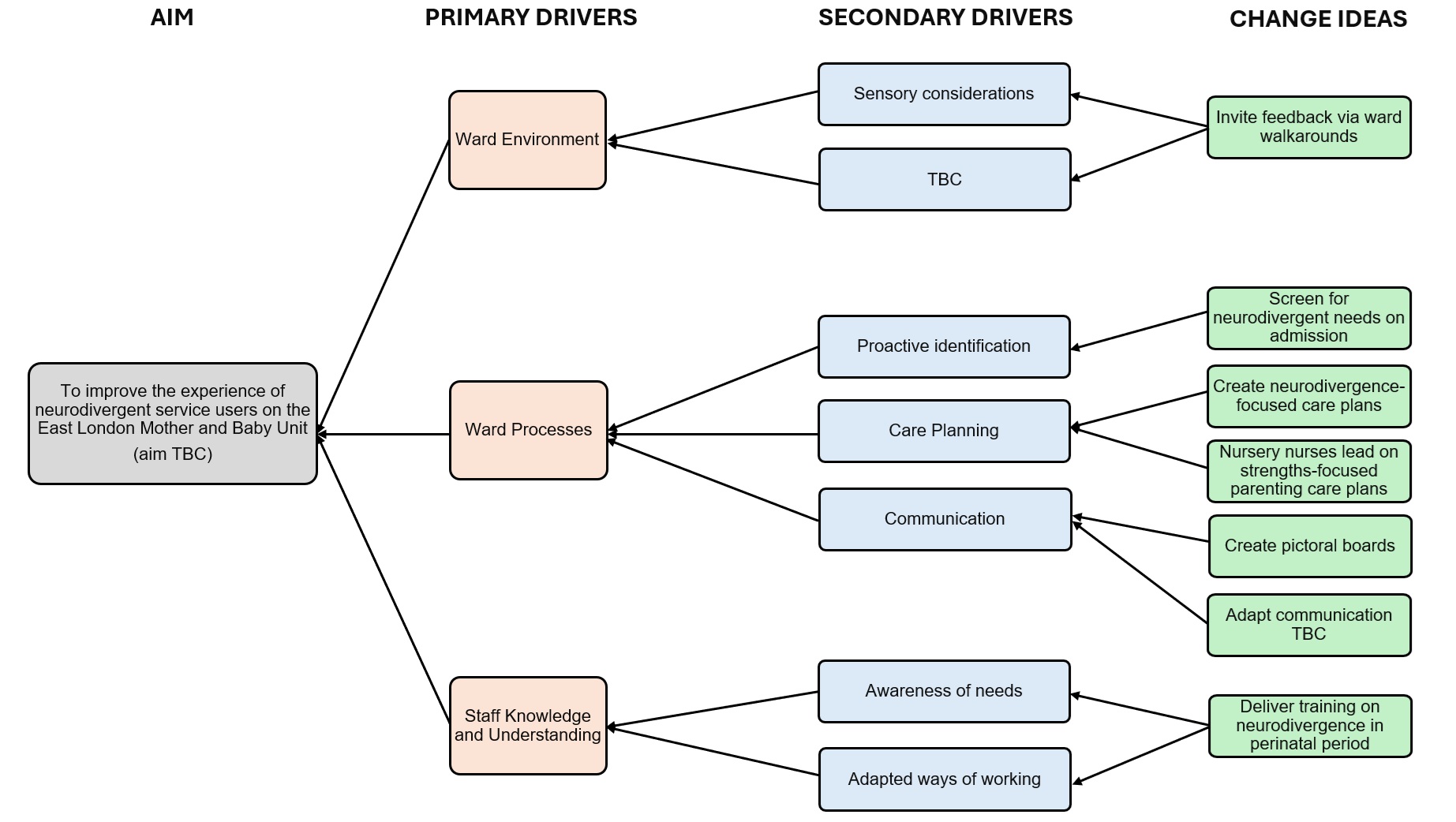
Figure 2. The team’s driver diagram (a work in progress)
Reflecting on the project, project sponsor and Trustwide Lead for Perinatal Mental Health Justine Cawley said,
“This work has come from really listening to the experiences of neurodivergent women and birthing people and recognising where our services haven’t always met their needs. It shows how quality improvement can translate lived experience into practical change; supporting staff to adapt care, reduce distress and improve outcomes for women, birthing people and their babies at a time that really matters.”
References
Drinkwater, S. (2025) ‘ADHD and Perinatal Mental Health: Breaking the Silence for Neurodivergent Mothers’ [Online]. Available at: https://maternalmentalhealthalliance.org/news/adhd-perinatal-mental-health-breaking-silence-neurodivergent-mothers/ (Accessed: 19th March 2026)
Elliot, J., Bayes, S. and Buchanan, K. (2025) ‘The Neurodivergent Perinatal Experience – A Systematic Literature Review on Autism and ADHD’, Women and Birth, 37(6), pp. 1-10. DOI: 10.1016/j.wombi.2024.101825 (Accessed: 19th March 2026)
Mackintosh, I., Reed, S. and Jayakody, S. (2024) ‘A Systematic Review of the Perinatal Mental Health Outcomes of Women with Neurodevelopmental Disorders’, BJPsych Open, 10(S1), pp.59-60. DOI: 10.1192/bjo.2024.200 (Accessed: 19th March 2026)
MBRRACE (2025) ‘Saving Lives, Improving Mothers’ Care 2025 – Lessons Learned to Inform Maternity Care from the UK and Ireland Confidential Enquiries into Maternal Deaths and Morbidity 2021-23’ [Online]. Available at: https://www.npeu.ox.ac.uk/mbrrace-uk/reports/maternal-reports/maternal-report-2021-2023 (Accessed: 19th March 2026)
Most Read Stories
-
Why is Quality Control important?
18th July 2018
-
2016 QI Conference Poster Presentations
22nd March 2016
-
Recognising Racism: Using QI to Help Take Action
21st January 2021
-
-
QI Essentials: What does a Chief Quality Officer do?
18th March 2019

-
Using data enabled us to understand our problem
31st March 2023

Follow QI on social media
To keep up to date on the latest concerning QI at ELFT, follow us on our socials.